
Insight
How to Turn Your Windows App into a Recurring Revenue Opportunity
If you sell a Windows client/server application, your customers are likely spending more than just the cost of your software.
They may be buying and replacing servers, paying local IT providers, managing backups and security, and maintaining the infrastructure required to keep the application running.
Much of that spending happens outside your business. Cloud delivery creates an opportunity to change that.
Instead of requiring customers to provide and maintain their own server environment, you can offer your application through the cloud as an ongoing service. Your customer gets a simpler way to use the software, while your company creates a new monthly revenue stream around a product it already owns and supports.
Can an existing Windows client/server application create recurring cloud revenue? The answer is yes. An ISV can offer its existing app through a cloud environment and charge for that delivery as an ongoing service. You can build and manage that cloud operation yourself or work with a managed cloud partner to do it on your behalf.
What is Recurring Revenue and Why is it Attractive?
Stripe defines recurring revenue as income a business can reasonably expect to receive repeatedly, on a set schedule, from the same customers. Its May 2026 guidance notes that this predictability can give businesses better visibility into future income and make planning for hiring, product investment, and expansion easier.
For an ISV with an established customer base, there is another advantage. You are not starting from zero.
Your customers already know the application and rely on it to run their businesses. Some may also be paying third parties to maintain the infrastructure around it.
That makes cloud delivery less about inventing a new product and more about adding a service around one that already has customers.
Understand the Revenue Opportunity
If you are considering cloud delivery (or rethinking how you manage it today), the conversation can become technical very quickly. What platform should we use? What needs to be rebuilt? Who will manage security? Who will support customers?
Those questions matter. But they do not necessarily need to come first.
A better place to begin is: what would our customers be willing to pay for a simpler way to access and operate the software they already rely on?
Now you are looking at cloud as a business opportunity rather than simply an infrastructure project.
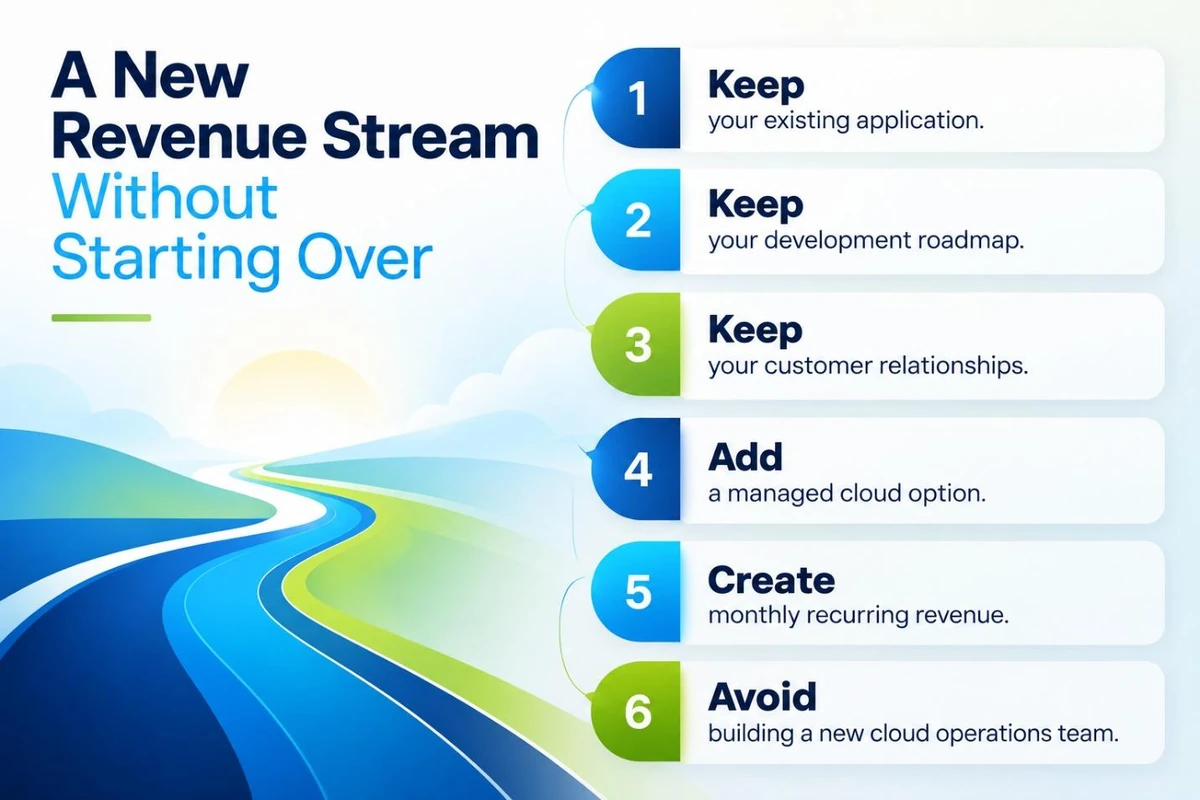
Your customers already know the application. Your development team knows the product. You own the customer relationship. The opportunity is to add another way to deliver that value.
Related reading: Cloud Delivery Is a Business Decision, Not Just a Technology Decision
Look at What Your Customer Is Already Buying
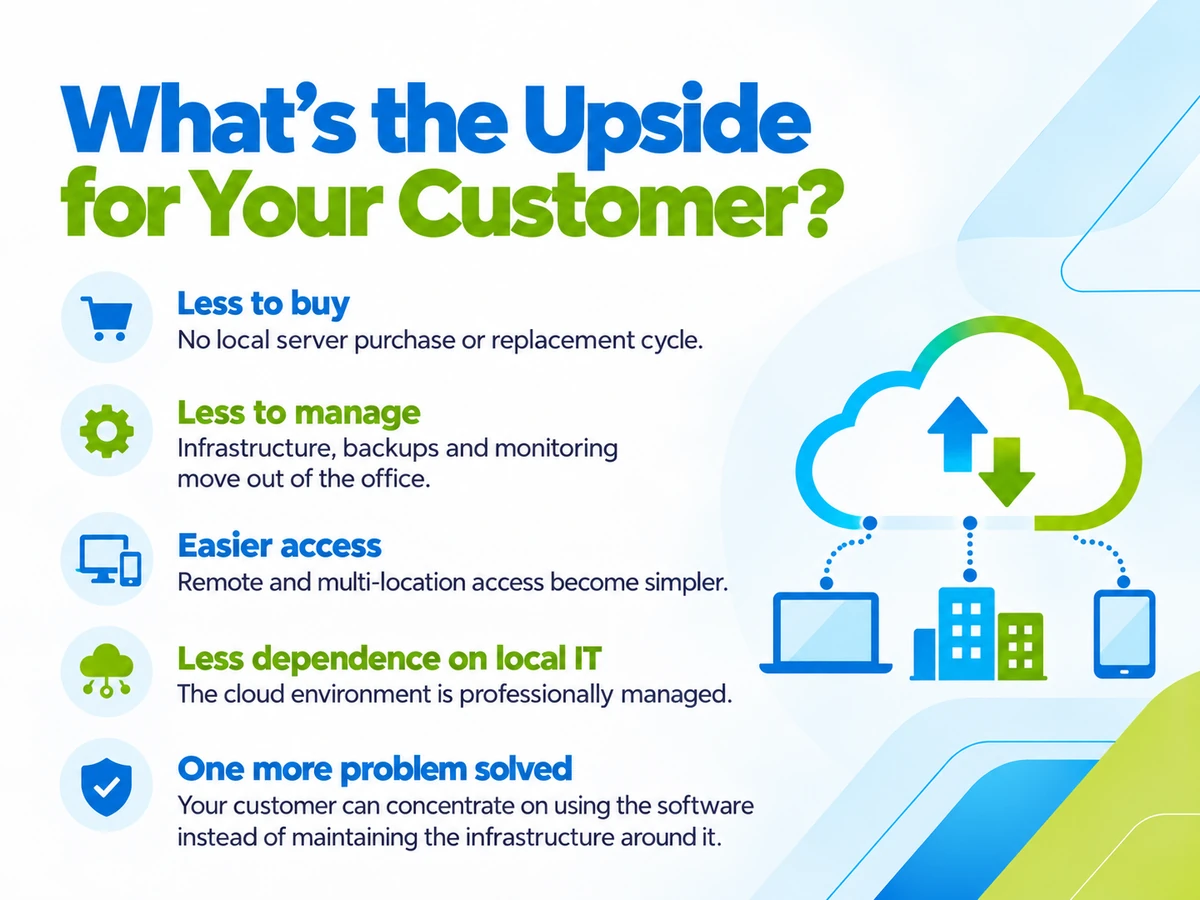
Traditionally, customers buy your software and then take responsibility for everything required to run it.
That may include server hardware, backups, security, maintenance, and local IT support. The ISV may receive little or none of the revenue associated with those services.
Cloud delivery gives you an opportunity to bring some of that value into your own offering.
Don't say: "Here is our application. Now you need to provide the environment to run it."
Instead say: "Here is our application, and here is a managed way to access and use it."
That is not simply another fee. It is another service.
Case Study: A Real-World Example of the Model at Work
Vela Cloud's approach grew out of real-world experience. One example involves an established vertical-market software company with a mature Windows application and a large installed customer base.
The company wanted to offer customers a cloud-hosted version of its software without rebuilding the application as SaaS. Rather than create and operate the hosting infrastructure internally, it worked with us to provide the cloud environment behind the application.
The software company continued to own and develop its product, sell to its customers and manage those relationships. Together with our parent company, Think Smart, we operated the hosted environment behind the scenes.
The result was a recurring hosted-service revenue stream alongside the company's traditional software business. And the company did not have to become a cloud operator to create it.
That experience helped shape the Vela Cloud model we now offer to other established ISVs.
Make Sure the Economics Work
Recurring revenue only makes sense if the cost of delivering it makes sense too.
Operating your own cloud environment involves much more than servers. There are backups, cybersecurity, networking, monitoring, maintenance, resource management, user access, and support.
For some ISVs, building that capability internally is a perfectly reasonable choice. For others, the staffing, expertise and ongoing responsibility make a managed partner more attractive.
Using a hyperscaler doesn't automatically eliminate those responsibilities, either. The infrastructure may be available, but somebody still has to design, secure, monitor, manage and support the environment.
Start with Customer Demand, Not Capital Investment
Building a cloud operation internally often means investing before you know how quickly customers will adopt it.
Before deciding how much you are prepared to spend on infrastructure, start with customer demand.
- Which customers would rather not own and maintain servers?
- Which need easier remote or multi-location access?
- Which are approaching a hardware replacement?
- Which prospects are already asking whether your software is available in the cloud?
Those answers can tell you a great deal about the opportunity before you make a major investment.
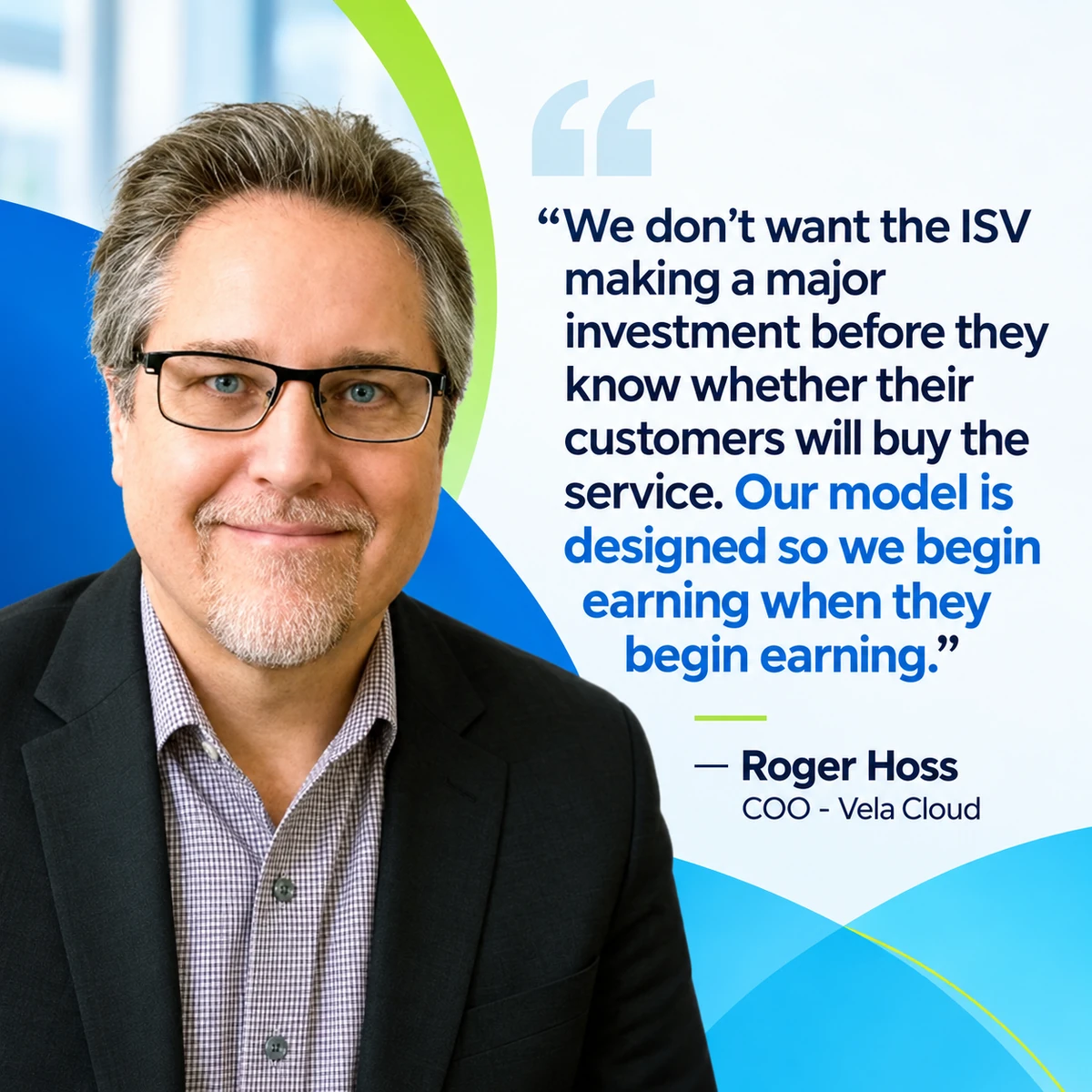
That is where the Vela Cloud model is different. We remove the need for a significant upfront infrastructure spend. Vela Cloud begins earning as the ISV begins generating recurring cloud revenue.
Cost predictability matters too. If you plan to charge customers a predictable monthly fee, you need confidence in what it will cost to deliver the service.
Vela Cloud provides predictable costs so you can establish your own hosted-service pricing and margin, while our team manages the cloud operations behind the application.
Your software remains your product. Your customers remain your customers. Cloud delivery simply becomes another service you can offer them.
The Choice Is Yours: Build Internally or Work with a Cloud Partner
You can absolutely build and operate your own cloud environment. Some ISVs do.
That means developing the internal capability to manage infrastructure, security, monitoring, backups, user access, and support in addition to developing your software.
The other option is to have somebody else operate that layer for you.
With Vela Cloud, you remain the software company. You continue to own, develop, price, and sell your application. You control the roadmap and maintain the customer relationship. We become the cloud operations partner behind it.
That gives you a choice. Build the cloud operation internally if that makes sense for your business, or work with a team built to manage it while you remain focused on the software and customers that made your business successful in the first place.
If you have an established Windows application and want to explore what recurring cloud revenue could look like without building the cloud operation yourself, let's talk. There may be a recurring revenue opportunity hiding in the product and customer base you already have.
Frequently Asked Questions
Can a Windows client/server application be moved to the cloud without being rewritten as SaaS?
Yes. Many Windows client/server applications can be delivered through a managed cloud environment without first being rebuilt as browser-native SaaS. The application and its requirements need to be assessed to determine the right approach.
Can an ISV make recurring revenue from cloud hosting?
Yes. An ISV can package cloud delivery with its software and charge customers an ongoing fee for the hosted service. The ISV determines its own customer pricing and business model.
Does an ISV have to operate its own cloud infrastructure?
No. An ISV can build and manage its own hosting operation or work with a managed cloud provider to handle infrastructure, security, backups, monitoring and support.
Does the ISV keep the customer relationship with Vela Cloud?
Yes. The ISV continues to own, develop, price and sell its software and maintains its customer relationships. Vela Cloud operates the managed cloud environment behind the application.
Sources
- Stripe, "Recurring revenue: Definition, models, and how it works" (updated May 2026). stripe.com