
Insight
Who Takes the Risk? The Hidden Financial Costs of Launching a Cloud Offering
By Roger Hoss, CEO, Vela Cloud
Launching a cloud offering can expose independent software vendors (ISVs) to high upfront costs before their first customer subscribes. Infrastructure, engineering, security, and support commitments can add up while revenue remains slow to materialize.
The challenge isn't necessarily whether customers want your software in the cloud. It's how much you're prepared to invest before you know how many will actually buy it.
Let's say you own an established software company. Your application works well, your customers are happy, and you're starting to see an opportunity to offer your software through the cloud.
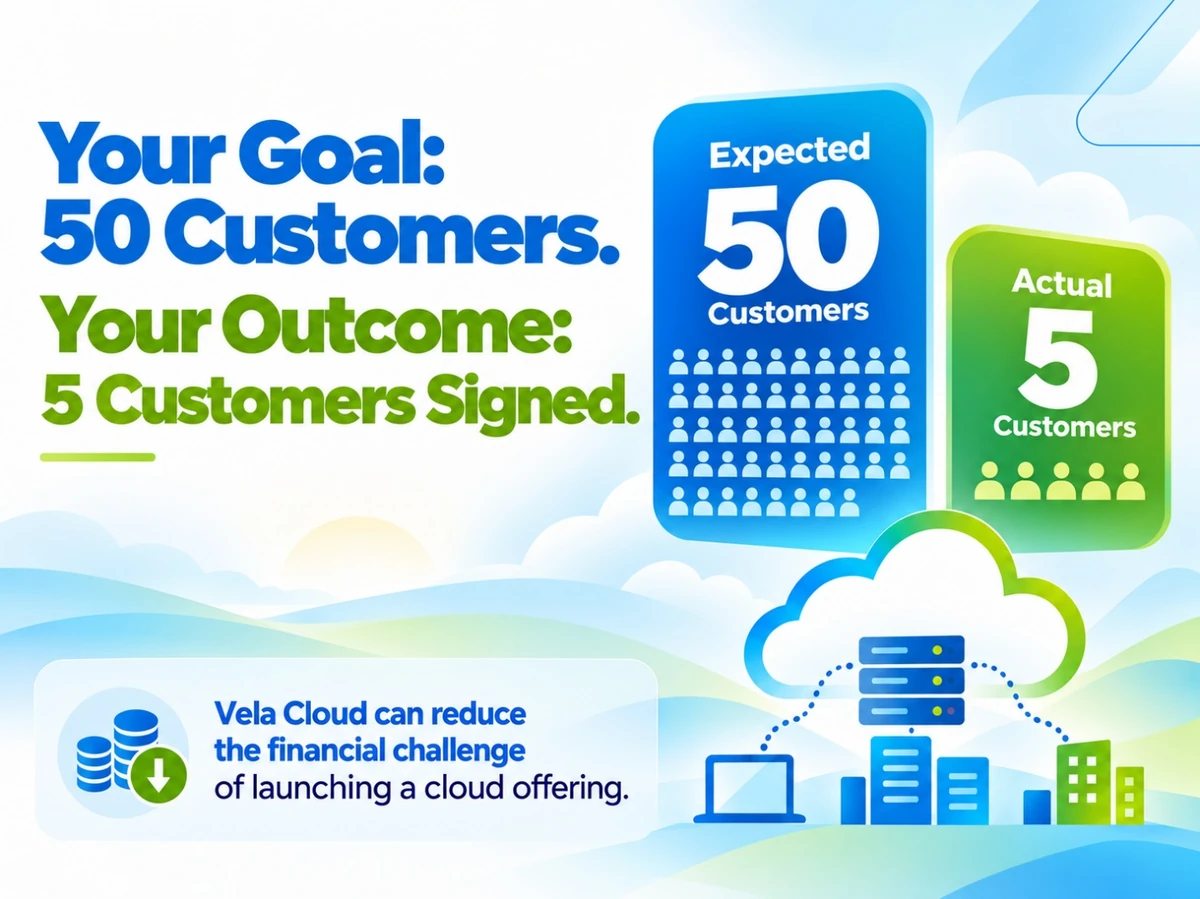
You've talked to customers, looked at the numbers, and decided there's enough interest to move forward. You figure you can attract 50 cloud subscribers in the first six months.
So you make the investment. You put the infrastructure in place, assign people to the project, work through the security requirements, and get everything ready.
Six months later, you've signed five customers.
Now what?
It doesn't necessarily mean you made a bad decision. Maybe customers are interested but aren't ready to move yet. Maybe they're waiting until their existing servers need replacing, or their budgets allow it.
Perhaps the opportunity is every bit as good as you thought, but it's going to take longer to develop.
The problem is that you've already spent the money and committed the resources based on getting 50 customers. And right now, you have five.
That's a risk I think software companies need to consider carefully before deciding how to bring their applications to the cloud.
The Hidden Costs of Launching a Cloud Offering
When people think about building their own cloud environment, the conversation often starts with infrastructure. How much will the servers cost? What about storage, networking, and licensing?
Those are important questions. But operating a reliable cloud service involves much more.
Someone has to configure and maintain the environment. Someone needs to look after security, monitoring, backups, and recovery. You also need to plan for capacity, performance, customer onboarding, and technical support.
And you need people who know what they're doing when something goes wrong.
You can build and operate the environment yourself using a provider such as Amazon Web Services or Microsoft Azure. But as you invest in resources and use services, the bills start arriving, whether your customers are paying you yet or not.
You might also need to hire outside expertise to get everything configured properly.
And there's another cost that's easy to overlook. If your developers and technical people are spending time building and maintaining cloud infrastructure, what aren't they working on?
Maybe it's a new feature customers have been asking for. Maybe it's an improvement that would make your software more competitive.
Those aren't always costs that show up neatly on an invoice, but they're real.
Related reading: Self-Hosting vs Managed Cloud Delivery: What's the Right Model for Your Software Business?
What Happens If Customers Take Longer to Sign Up?
Let's go back to our five customers.
You expected 50, so you planned and invested accordingly. But six months in, you're nowhere near that number.
Do you keep funding the operation and hope adoption picks up? Do you scale things back? How much longer are you prepared to carry the costs before you start seeing the return you expected?
And what if it takes 18 months to reach your target rather than six?
I don't think there's anything unusual about this situation. Customer adoption is difficult to predict, particularly when you're introducing a new way for people to use software they've relied on for years.
You can do your research, talk to customers, and build a sensible forecast. But until people start buying, it's still a forecast.
How Can ISVs Reduce the Financial Risk of Cloud Delivery?
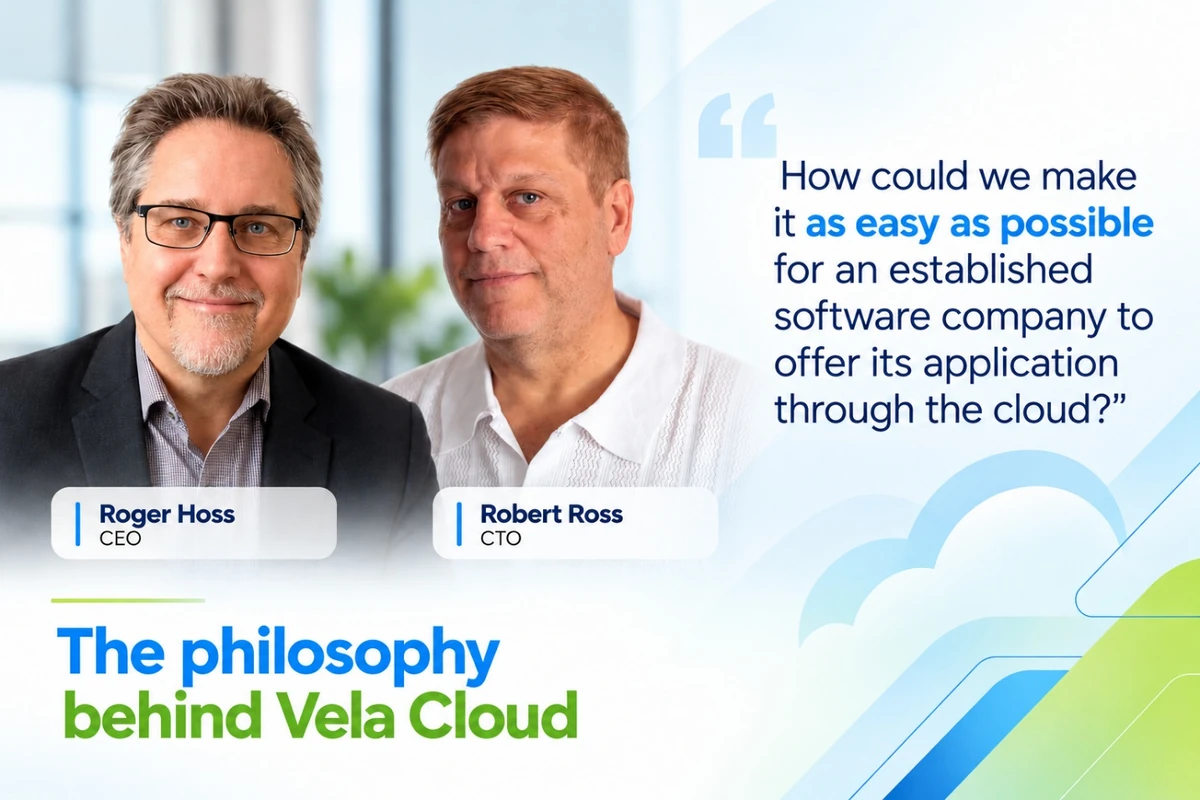
When Rob Ross and I discussed how we wanted Vela Cloud to work with independent software vendors, we kept coming back to one idea. How could we make it as easy as possible for an established software company to offer its application through the cloud?
One of the biggest obstacles was the upfront investment and the uncertainty around how quickly customers would subscribe.
So we decided to approach things differently.
Rather than asking the ISV to pay for the cloud environment before it had paying customers, we would take on the upfront cost of getting that environment ready.
Under our proposed partnership model, there are no setup charges. We invest in preparing the cloud infrastructure and provide the managed services needed to deliver the application.
And here's where the financial difference becomes clear. If the ISV signs only five customers instead of the 50 it anticipated, it pays Vela Cloud for those five customers, not the original forecast.
In return, the ISV agrees to work exclusively with Vela Cloud for an agreed period and focuses on onboarding customers.
We invest in making the cloud offering possible. The ISV invests in bringing it to market.
Sharing the Risk, Sharing the Opportunity
Our approach is built around a simple idea. We're willing to invest alongside the ISV rather than expecting it to carry the entire upfront financial burden. We both have a stake in its success.
It's not a risk-free arrangement for either party. But we believe sharing the commitment creates a better foundation for a long-term relationship.
If you're considering offering your established Windows application through the cloud, I'd encourage you to ask yourself one question: what will you have committed financially if customer adoption takes twice as long as you expect?
It's worth knowing the answer before you start.
Interested in our partnership model? We'd be happy to explore what that could look like for your business. Let's talk.
Thanks for reading.
Frequently Asked Questions
Does an ISV have to invest in cloud infrastructure before getting paying customers?
Not necessarily. An ISV that builds and operates its own cloud environment may incur infrastructure and operating costs before customer revenue begins. Under Vela Cloud's proposed partnership model, Vela Cloud absorbs the initial cloud setup investment, and the ISV pays for customers who subscribe to the service.
What financial risks remain when an ISV partners with Vela Cloud?
The ISV remains responsible for attracting customers, collecting payments and meeting its contractual commitments. Vela Cloud significantly reduces the upfront infrastructure investment, but both parties share responsibility for making the offering successful.