
Insight
When Your System is Down, Your Business is Down, Too
Nobody looks forward to calling tech support. Something is not working. You cannot access the system. A customer is waiting. Your staff is asking what to do next. And now you have to navigate a phone tree, sit on hold, or explain your problem to several different people to get help. It doesn't have to be that way.
We're all technology people at Vela Cloud, and we don't like calling tech support either. In fact, it's one reason for our simple philosophy about customer support: when someone needs help, make it as easy as possible for them to get it.
It sounds obvious, but as technology companies automate more and more of their contact systems, we think it makes good business sense to keep people at the center of the customer experience. For us, human-first customer support means using technology to make it easier for customers to reach knowledgeable people and get problems resolved, not harder.
When Technology Stops, Business Gets Personal
Our perspective comes from years of supporting businesses that depend heavily on their software.
Take an optometry clinic. When its practice-management system is unavailable, it is not just an inconvenience in the back office.
- Patients are standing at the front desk.
- Reception needs to know who has appointments.
- Patient records need to be available.
- Staff throughout the clinic may be unable to complete their normal workflows.
If the technology stops working, a surprising amount of the business can stop with it. That experience has shaped the way we think about support.
When somebody calls us because they cannot access an application, we know they may not simply be trying to solve a technical problem. They may be trying to get their business moving again.
Putting People First in People, Process and Technology
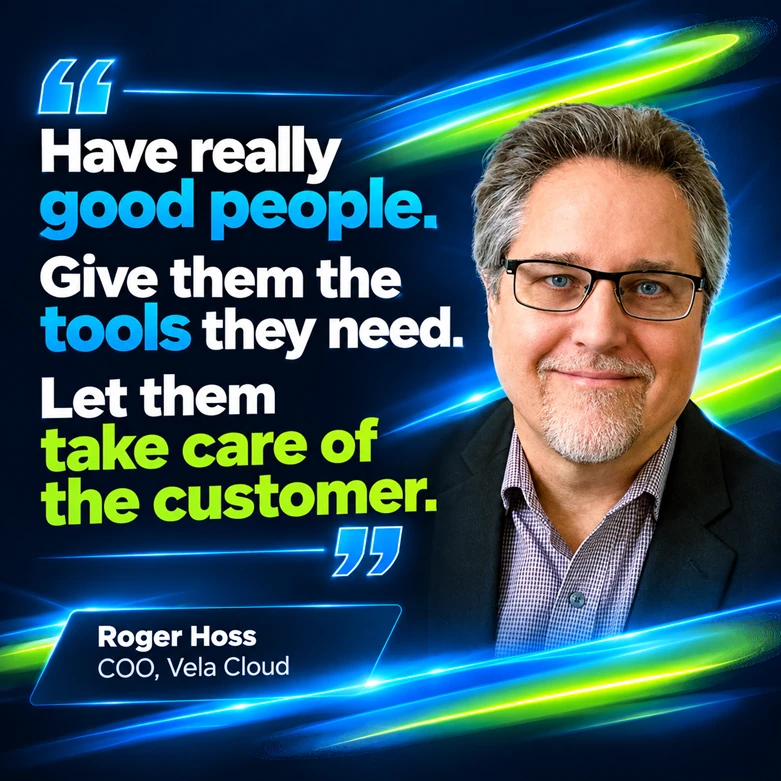
Our support model reflects the Golden Rule: treat people the way you would want to be treated.
For us, that means leading with a human touch. We're cautious about putting automation between a customer and a real person. We're not anti-automation. We just think it has to earn its place by improving the customer experience.
We are a technology company. We like technology, and we're excited about what AI and automation makes possible. AI can help support teams diagnose issues, find answers, and respond faster. We are happy to use technology when it helps our team serve customers better.
We're less interested when it becomes another barrier between a customer and someone who can help.
In fact, as more companies automate customer interactions, reaching a knowledgeable, friendly person may become more valuable, not less.
For us, the balance is pretty simple:
- Give good people the tools to help.
- Let them take the time required to solve the problem.
- Respect the customer's time.
- Use technology when it improves the experience.
Answering the Phone is Only the Beginning
Putting a human on the phone doesn't help much if all that person can do is transfer you somewhere else.
That is why another part of our philosophy is to give the people answering customer calls the tools and knowledge to actually help. We equip our support team to solve the problem, answer the question, or move it meaningfully toward a resolution.
That might mean a technical question. It might mean billing. It might be an account question. Or it might simply mean knowing exactly who needs to get involved next instead of sending the customer into another queue.
The objective is to help.
What Good Support Looks Like from the Other End of the Phone
One person who puts this philosophy into practice every day is Rich Blexrude, our Tech Engineer Lead and Client Service Responder.
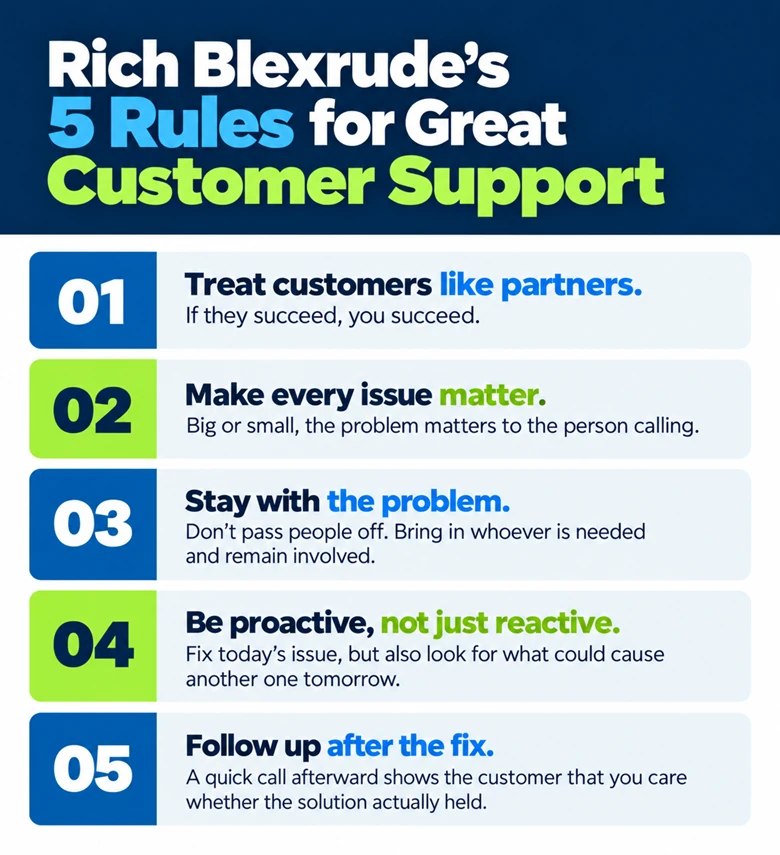
Rich doesn't really like calling the people he supports "customers." He thinks of them as partners and says, "If they succeed, we succeed."
That attitude shows up in the way he handles a support call. When someone calls, his first job is to reassure them that he's going to help. Then he stays with the problem until they're comfortable it's been resolved.
He is also looking beyond the immediate issue. If he notices another connection is slow, or something else could create problems later, he'll often deal with that too. His calls can sometimes run longer because, as Rich explains, he would rather not close the ticket and move on until everyone is set up and able to work properly.
For Rich, good support doesn't end when the ticket closes either. Whenever he can, he follows up afterward to make sure everything is still working.
That's the difference between closing a ticket and taking care of a partner.
Rich is also adamant that telling a frustrated and sometimes frantic customer to contact someone else is a big no-no. Instead, Rich recommends a "soft pass." If the issue ultimately belongs with the software vendor, local IT provider, or another team member, the answer should not simply be, "You need to call another number." The customer shouldn't have to diagnose where the problem lives before someone helps. Wherever possible, stay with the customer, connect the right people, and help move the issue forward.
The Value of a Support Call Shouldn't End When the Call Does
Rich sees a support call as an opportunity for continuous learning and improvement.
As he works through a problem, Rich documents what he finds, takes screenshots, and records the steps used to resolve it. Those learnings are shared with the rest of the technical team and added to Vela Cloud's internal "Training and Cheat Sheet Guide." Our parent company, Think Smart, created this document years ago to give team members practical steps for diagnosing, resolving, and learning from issues they may encounter again.
It has proved enormously beneficial and creates a useful cycle: one customer's problem can help the next customer get an answer faster, while also building the knowledge and confidence of the people providing support.
Rich is equally enthusiastic about continuous learning within the team. He encourages team members to develop expertise in areas that interest them, whether that is cybersecurity, emergency response, server optimization, or another technical discipline, and to bring those ideas back to the team. For him, better support and professional growth go hand in hand.
The goal isn't simply to solve one problem. It is to make the whole team better prepared to solve the next one.
Nobody Wants to Sit on Hold
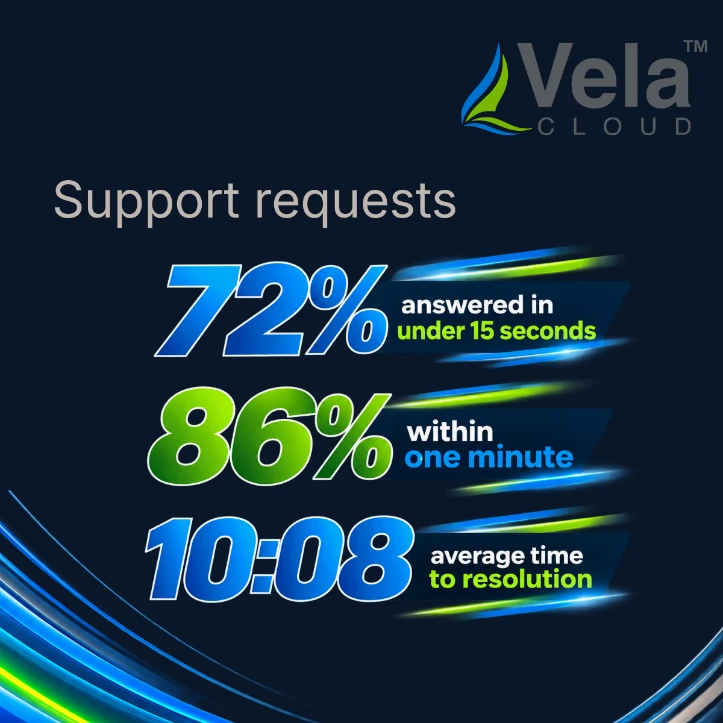
Being "human-first" doesn't mean pretending someone will always answer immediately. Sometimes several people need help at once.
What matters then is respecting the customer's time.
If someone can leave a message and get a callback rather than sitting on hold, let them. They may have employees to manage or customers standing in front of them. Even if their computer system is down, they still have a business to run. We also continually look for the small things that create unnecessary friction.
- Do customers really need to work their way through several levels of a phone menu?
- Do they need to figure out whether their question belongs to support, billing, or someone else before they can speak to us?
The more of that we can remove, the better.
Why Effective Customer Support Matters to ISVs
Customer support is more than an operational issue. It can directly affect the relationship a software company has spent years building.
Gartner reported in its 2024 article "Remove Effort from Each Phase of the Customer Service Journey" that only 14% of customers who experienced a high-effort service interaction said they were likely to continue doing business with the company. Making support easier isn't just about being nice to customers. It can directly affect whether they remain customers.
When an ISV chooses Vela Cloud to deliver its application through the cloud, it trusts us with part of its customer relationship.
We do not take that lightly.
You may have spent years building your software company and earning your customers' trust. They know your people. They know your product. They have expectations about how they will be treated.
Good service can strengthen that relationship too. In the 2024 Salesforce report "Teams Tap AI and Data to Drive Revenue as Service Expectations Rise," Salesforce reported that 88% of customers say good service makes them more likely to purchase from the same company again.
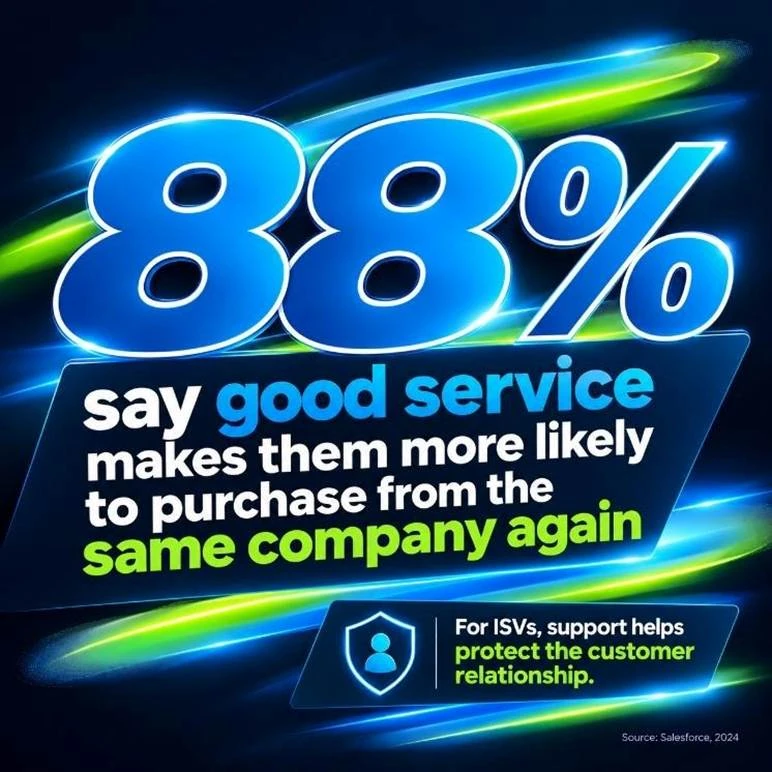
For an ISV, that means the people supporting your cloud environment become part of protecting a customer relationship you may have spent years building.
Now you are bringing another company into that relationship, and that can be uncomfortable. If I were the software vendor, I would be nervous about it too.
The last thing an ISV wants is to hear that a valued customer loves the software but hates dealing with the company supporting its cloud environment.
We never want to be the frustrating part of your customer's experience. We want to feel like an extension of the team behind the application, and we work hard to earn that trust.
Have Questions? Talk to a Human.
We've spent this entire article explaining why we think real conversations still matter, so it would be a little strange to end with anything else. If you'd like to talk about how Vela Cloud supports ISVs and their customers, get in touch. We'd be happy to talk.
Thanks for reading.
About the Author

Roger Hoss is COO of Vela Cloud. He has spent much of his career helping businesses use technology in practical ways, with a strong belief that good technology should make life easier for the people who rely on it. At Vela Cloud, he focuses on helping software companies deliver their applications through the cloud while protecting the customer relationships they have worked hard to build.
Frequently Asked Questions
What is human-first customer support?
Human-first customer support puts the needs of the person experiencing the problem ahead of support efficiency. That means making it easy to reach knowledgeable people, equipping them to solve problems, and using automation when it improves the customer experience rather than creating another barrier.
Why does customer support matter when an ISV moves its application to the cloud?
When an ISV works with a cloud delivery partner, that provider becomes part of the ISV's customer experience. Customers may not distinguish between the software company and the company operating the cloud environment when something goes wrong, so support quality can affect a customer relationship the ISV may have spent years building.
What happens when it isn't clear whether the problem is with the application or the cloud environment?
The customer should not have to diagnose the problem before asking for help. Vela Cloud helps determine whether the issue involves infrastructure, access, peripherals, integrations, or the application itself and works with the ISV when application expertise is required.
How does Vela Cloud use AI and automation in customer support?
Vela Cloud uses technology to help the support team serve customers better. AI and automation can help diagnose issues, find information, and respond faster, but the goal is to use those tools behind the scenes rather than make them an unnecessary obstacle between a customer and a person who can help.
What does a "soft pass" mean in customer support?
A soft pass means staying involved when another provider or team needs to help resolve an issue. Rather than simply telling the customer to call someone else, the support person connects the right people and moves the issue toward resolution so the customer isn't left starting over on their own.
Sources
- Gartner, "Remove Effort From Each Phase of the Customer Service Journey" (2024). gartner.com
- Salesforce, "Teams Tap AI and Data to Drive Revenue as Service Expectations Rise" (2024). salesforce.com